
Escondido Resident Lookup Records
A one-person search should begin with the source most likely to distinguish the name. A parcel record can anchor a property interest. A court file can provide a dated party and case context. A vital application can establish an event when eligibility permits. A license or business filing can confirm a public affiliation. A city directory or yearbook can place a person in an older household or school community. No row in the table is a universal resident list.
| Record | What it confirms | Where to search | Access |
|---|---|---|---|
| Assessment and title | Parcel interest and recorded parties | ARCC and Escondido GIS | Online parcel facts; owner channel restricted |
| Voter status | Authenticated registration status and district | California Secretary of State | Personal lookup; fuller file by statute |
| Court docket or file | Party name, case type, dated events | San Diego Superior Court | Online route, clerk, or courthouse terminal |
| Vital record | Birth, death, or marriage event | ARCC or CDPH | Authorized or informational copy rules |
| License or business filing | Public credential or entity affiliation | DCA or bizfile Online | Free agency search |
| Directory or yearbook | Dated listed household or school link | Pioneer Room | In person, request, or digital partner |
Use a current name and address clue for the first pass. Use a former surname, trust, business name, middle initial, occupation, school, or date to separate namesakes. The result should be saved with its source, date, and access limit.
Match One Escondido Name Lookup
The same-name trap is local and ordinary. A court party may share a name with a parcel owner. A directory may abbreviate a given name. Spanish surnames may appear as a compound or in a normalized database form. A married name, former surname, trust, or business can change the search string. Preserve middle initials and name order, then test variants without publishing private birth details.
The right-person test needs at least two independent matching facts. An Escondido address can anchor a name to a parcel, but a deed names ownership parties rather than everyone using the site. A court case can establish party involvement, but a docket hit does not establish the present address. A professional license can show status and an office contact, not a home location. A directory entry shows the subscriber or listed person for that edition.
When a result conflicts, do not merge the records. Keep both possibilities, return to the custodian, and ask how its index handles variants. A source that cannot disclose the requested field is still useful because its limit narrows the next step.
Escondido Court Records and Dockets
Escondido-area cases route through the San Diego Superior Court, with North County matters handled in Vista. Civil, criminal, family, mental-health, and probate access differ. Case number is the precise field. Party-name searching generally uses last or business name with an optional first name and case-type or date refinements. The court’s access page points to the applicable route and explains when a clerk or courthouse terminal is needed.
| Result field | What it can show |
|---|---|
| Case number and title | The case identity and caption used by the court |
| Party names and roles | Named plaintiff, defendant, petitioner, respondent, or other role |
| Case category and courthouse | Type of matter and location handling the case |
| Register of actions | Filing, hearing, status, and disposition events |
| Document link | Image only where the court permits public remote access |
Some 2008-and-later civil matters have purchasable images, while criminal documents often require courthouse review or copy request. Online coverage excludes juvenile, traffic or minor-offense, and pre-1974 cases, with other case-type and time limits. Sealed, expunged, adoption, and confidential family material may be unavailable or redacted.
San Diego Superior Court record access is the controlling route for a court-based Escondido resident lookup.
North County Division location information identifies the Vista courthouse serving Escondido-area matters.
Verifying an Escondido Resident
Verification is a sequence of modest checks, not one dramatic search. Anchor a name to a dated address or public affiliation, then compare an independent record. Keep the source’s distinction between ownership, residence, and listed participation. A certified copy comes from the custodian, not from a search-result screen.
- Write down the full name, variants, known street or parcel clue, time window, and the question the lookup must answer.
- Use the county property or business route to find a differentiating public affiliation. Do not infer residence from a business address.
- Run the court party search by name and case type, then capture the case number, courthouse, roles, and dated events.
- Check the appropriate vital-record application or historical index. Treat an obituary, directory, or yearbook as supporting evidence.
- Ask the custodian for a certified or corrected record only after the match is anchored and eligibility is clear.
- Docket
- A court’s register of a case’s filings, hearings, and status events.
- Index versus image
- An index helps find a record; an image is the underlying document and may require a copy request or kiosk.
- Certified copy
- A copy issued by the custodian with an official certification, often subject to eligibility and a fee.
That sequence keeps an Escondido resident lookup from turning a coincidental name into a false identity.
San Diego Registrar of Voters registration information is the county contact route for election administration and voter-file questions.
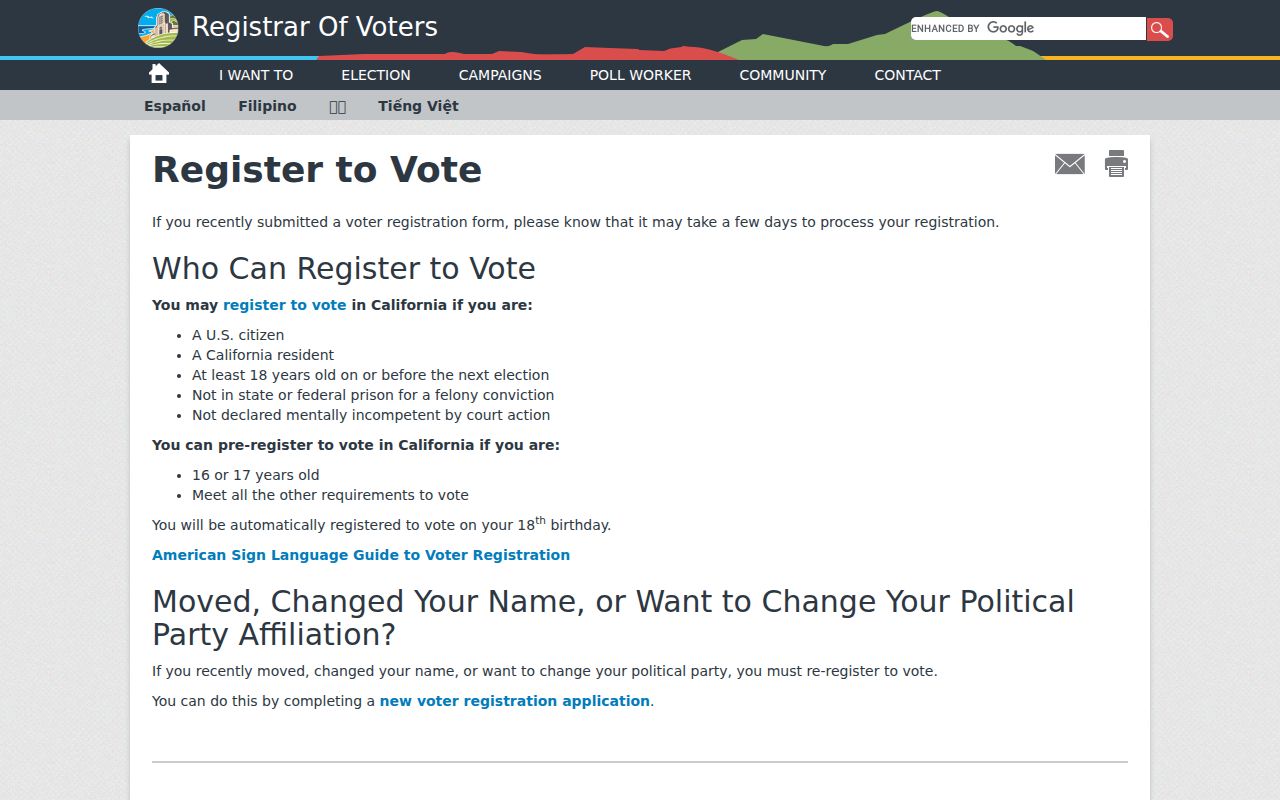
Registration services explain the difference between a public agency contact and a public name directory. Record only the lawful field needed for the identity question.
Escondido Vital Record Lookup Choices
Health and Safety Code §103526 separates authorized certified copies from informational certified copies. An authorized copy can establish identity for listed eligible people. An informational birth, death, or public-marriage copy is marked not valid to establish identity and may still be available to a broader requester. Confidential marriage records are different: Family Code §§509-511 limit copies to a party or specified legal process.
ARCC issues local birth, death, public-marriage, and eligible confidential-marriage records. CDPH is the statewide issuer. Applications ask for event type, names, date and place, relationship or eligibility, copy type, quantity, signature, payment, and return method. A mailed authorized-copy request may need a notarized sworn statement. Divorce decrees come from Superior Court, while CDPH can issue a limited certificate of record for certain years.
CDPH’s published 2026 state fees are $31 for birth, $26 for death, $19 for marriage, and $18 for a dissolution certificate. A search fee can be retained if no record is found. Current processing estimates change, so use the live California Vital Records page or ARCC’s ordering instructions before sending payment.
Escondido Voter Lookup Is Authenticated
My Voter Status is designed for the voter who is checking their own registration. Prompts may include first name, last name, date of birth, California driver license or identification details, or other verification. A result can show registration status, party preference, registration address or mailing status, precinct, district, and election information. A nonmatch can reflect spelling, a recent update, or protected status.
The fuller voter file is not an unrestricted Escondido resident lookup. Elections Code §§2180-2194 and Secretary of State rules require a permissible purpose. An application identifies the requester, contact information, organization, geography or data requested, security commitments, and signed certification. Sensitive identifiers and signatures are not ordinary public fields. Safe at Home addresses receive protected handling. Election participation does not reveal how a person voted.
California voter-information access rules show the application path and its limited purpose. My Voter Status is therefore a personal status tool, while the county Registrar of Voters is the local administrative contact, not a public reverse directory.
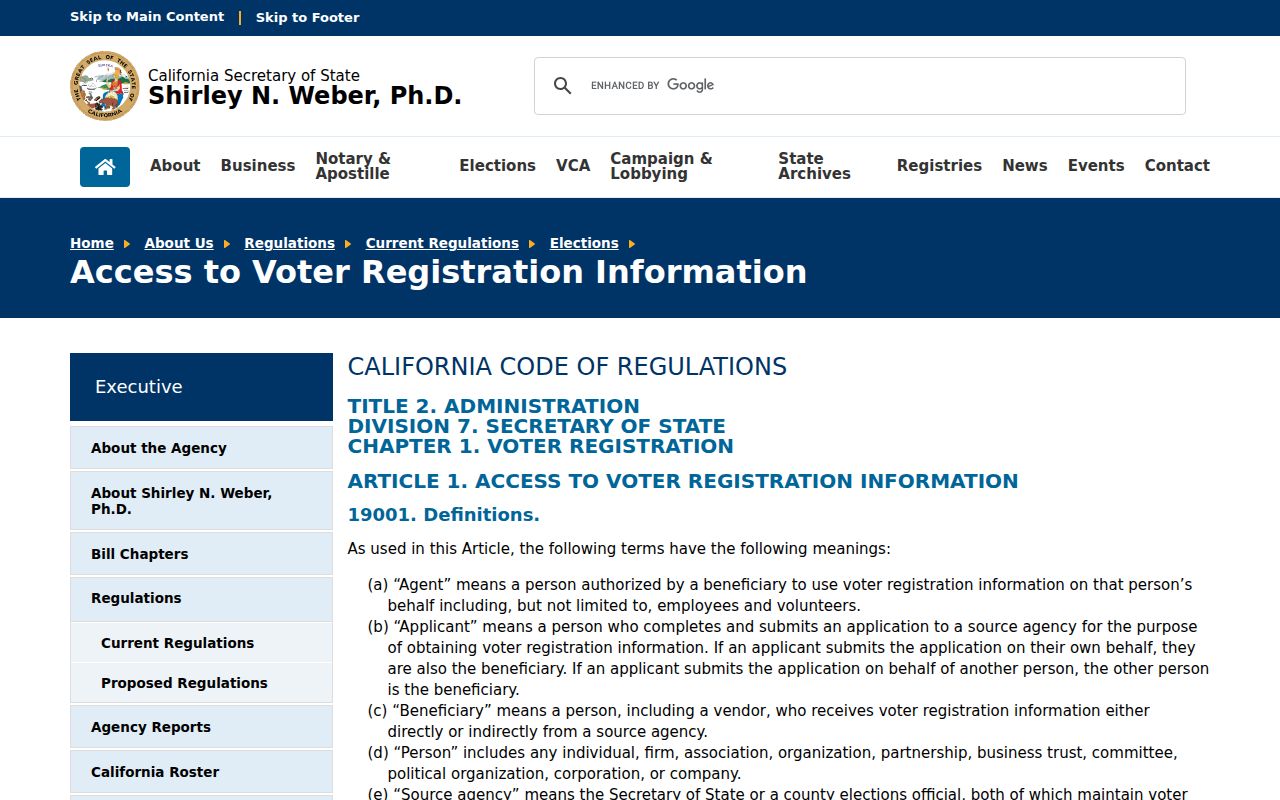
The state access rules show why a name search cannot be converted into a street-wide voter list without a permitted application.
Escondido Resident Trails for Heirs
Different personal questions call for different official trails. An heir search can start with a probate case, petition, recorded transfer, and death notice. A former classmate search belongs in Pioneer Room yearbooks, local newspapers, and alumni material. A business-owner search can compare Secretary of State bizfile, a county fictitious-business-name filing, city permits, and a state license. Dates keep those affiliations from being confused.
California adoption information is confidential. A birth-parent or adoption question should use official CDSS contact-preference and court processes rather than a public name search. For a deceased former resident, pair a directory entry with obituary, cemetery, probate, and deed evidence. Each source supplies a different relationship or date.
The Department of Consumer Affairs license search can use a license type, board, number, city, or name. The result fields vary by board. A license record is an official credential clue, not proof of a private address or current residence.
Escondido Records Request Fallback
When the needed city record is not searchable online, use the California Public Records Act, Government Code §§7920.000-7931.000, for an identifiable existing record. The law does not require Escondido to create a new database or answer a broad question about a person. It generally gives the agency ten calendar days to determine whether the request seeks disclosable records, with a possible written fourteen-day extension for unusual circumstances.
Use Escondido NextRequest with a name only when the record type, department, date range, address, APN, permit, case, or agenda packet is clear. Search completed requests first. Fire and incident reports may be routed through the portal. EMS patient-care records use a patient or authorized-party channel because HIPAA applies.
Ask for electronic records and reasonably segregable portions. Inspection is ordinarily free, but copies and electronic extraction can carry direct lawful costs. A focused request gives the custodian a fair chance to locate the record and gives the requester a clear basis for follow-up.
Legal Limits on an Escondido Resident Lookup
Safe at Home protects qualifying participants with a substitute mailing address and confidential forwarding. Government Code §7928.205 limits publication of specified officials’ home addresses and is cited by ARCC for online ownership suppression. The federal Driver’s Privacy Protection Act limits DMV address disclosure. Utility, delivery, and private association data are not ordinary public resident fields.
California Safe at Home explains substitute-address confidentiality for qualifying participants.
Lawful personal use. An Escondido resident lookup is for genealogy, reconnecting, civic research, and personal safety awareness. Do not use a record to stalk, harass, intimidate, or harm another person. When a source is wrong, contact its custodian for correction.
California privacy rights can reach qualifying information held by covered businesses, including requests to know, delete, correct, or opt out of sale or sharing. The CPPA DROP platform does not erase source records held by San Diego County, the City of Escondido, courts, or state agencies. A public-record correction must go to the source office.